
Textile-to-textile recycling has working technology, willing brands and ambitious targets. What it still lacks is bankability: the confidence that lets investors and lenders put capital behind new plants. At our side session during the Textile Exchange Conference in Vancouver in October, we brought together four voices from across the value chain to ask what it will take.
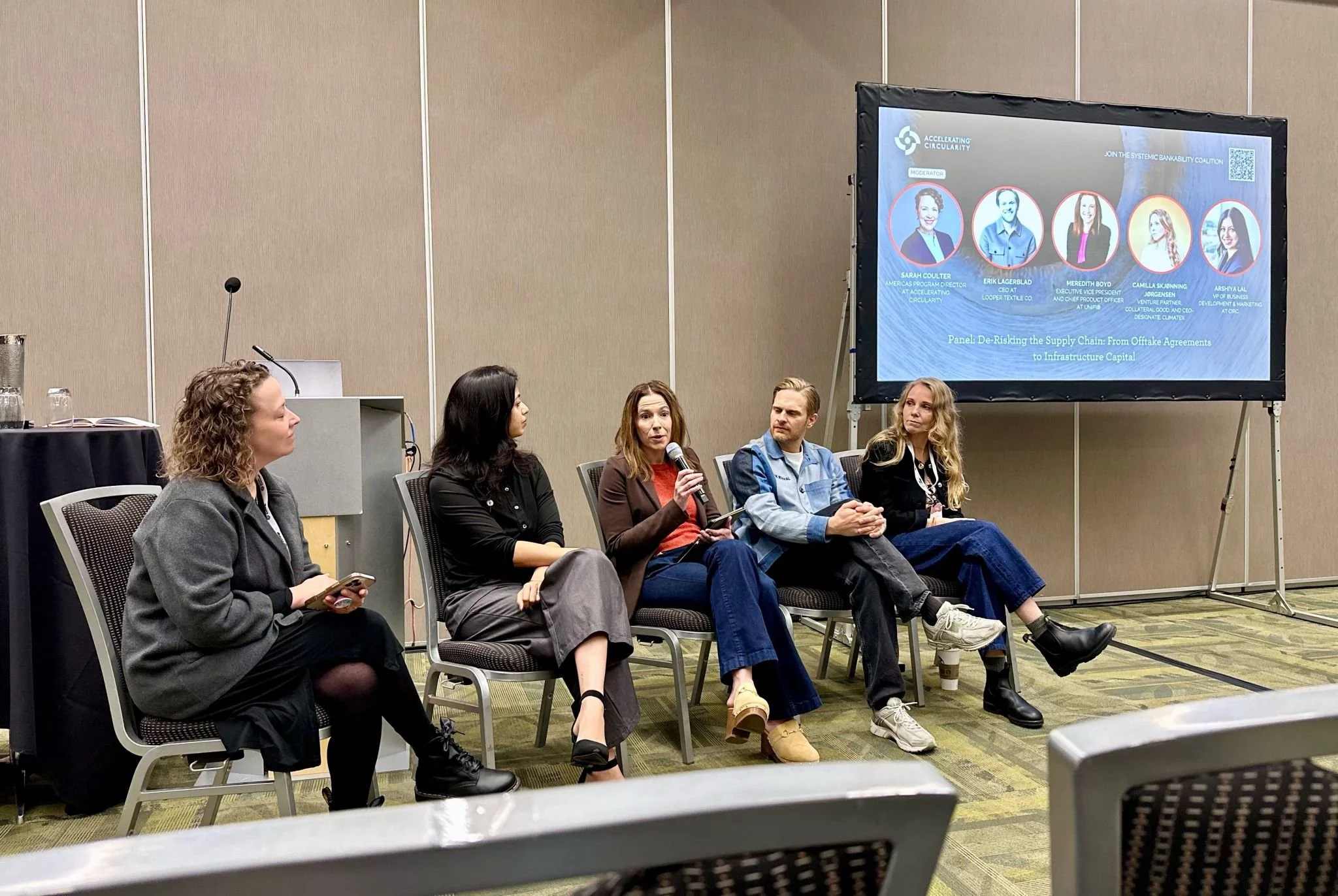
The panel agreed that bankability won’t come from brand offtakes alone, but from clear commitment signals, shared risk and real purchase orders across the whole value chain.
Analyzing the offtake
The industry has borrowed offtake models from sectors where 7–10 year contracts are standard. Fashion, which buys reactively, cannot sign them. “If we’re betting on individual, brand-by-brand offtake agreements alone to finance textile recycling, I think we risk falling short. We need to explore broader financing models that reflect how the industry actually operates,” said Camilla Skjønning Jørgensen, Venture Partner at Collateral Good and CEO-designate of CLIMATEX.
Her suggestion: call these deals what they are, a public commitment signal. It costs a brand little, but it tells investors a customer exists. Meredith Boyd, Executive Vice President and Chief Product Officer at UNIFI, went further. “The contract we look for is a purchase order. Orders for materials available today are what drive revenue and the next round of investment.”
Sharing risk lowers it
Investors want binding terms that mirror other industries, said Arshiya Lal, VP of Business Development & Marketing at Circ. Agreements carry more weight when spinners, mills and other producers are named alongside the brand. The tension is real: banks need rigidity, while brands need flexibility to shift orders within a year.
Lal pointed to Circ’s partnership with Huafon on its future commercial-scale facility in China as an example of how working with an established industry partner can help lower the financial risk of bringing a project to scale. Erik Lagerblad, CEO of Looper Textile Co. and a former investor in recyclers, made the case for pooling: “Ten brands coming together and agreeing on similar terms with one innovator is worth a lot more.”
Fiber Club shows this works. Started by Circ with support from Fashion for Good and Canopy and now open-sourced, it pools several brands’ demand to reach minimum order quantities for pulp, fiber and yarn, then moves brands milestone by milestone toward commercial agreements. Bestseller’s first product from the program with Circ launched the day before our session.
Fixing the economics underneath
Pooled demand won’t be enough while sorting loses money. Looper loses money on every kilogram it sends to recycling, and can’t justify an automated sorting line without demand signals. With recyclers unable to pay much more, he sees higher EPR fees for sorting-for-recycling as the real fix.
Skjønning Jørgensen added that operating economics, not capital grants, are the bottleneck. She floated a pooled rebate that rewards those who take risk, and warned that demanding virgin price parity from day one stunts R&D.
Scaling together
The common thread was collaboration. “Any recycler doing well is good for all of us,” said Lal. For brands, that means signaling commitment, ordering what exists now and pooling demand with peers. Or, as one panelist put it: “Let’s not let perfection be the enemy of progress.”
This panel was part of the launch of our Systemic Bankability report. We are now turning the findings of the report into action, starting with a pre-competitive coalition. Contact us at systemic-bankability@acceleratingcircularity.org to learn more.